Operational and embodied carbon

Whole-life carbon assessment

A traceable carbon baseline and defined option comparisons, linked to the design stage and the decision the team needs to make.

A detached modern brick home on a landscaped development.

When you need this work

Operational energy is only one part of a building's impact. Whole-life carbon assessment considers emissions from products, construction, use, replacement, end of life and relevant benefits beyond the asset boundary.

Briary scopes the assessment around the client, planning or funding requirement and the project stage. The methodology, reference study period, life-cycle modules, exclusions, data hierarchy and reporting format are agreed before calculation. Where the RICS professional standard controls the work, the scope identifies the current Whole Life Carbon Assessment, second edition, version 3, including its mandatory contingency allowance and data-quality treatment. Data can be structured and tested for an agreed One Click LCA import workflow where commissioned; compatibility is not assumed until a representative project import has been checked. This service does not imply accreditation by RICS, One Click LCA or another scheme.

The RICS WLCA standard sets out the assessment framework; the commissioned brief confirms the version and required reporting.
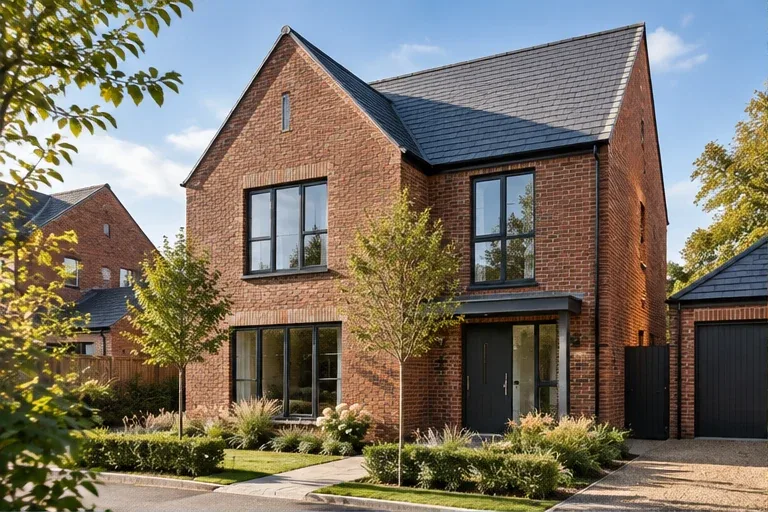
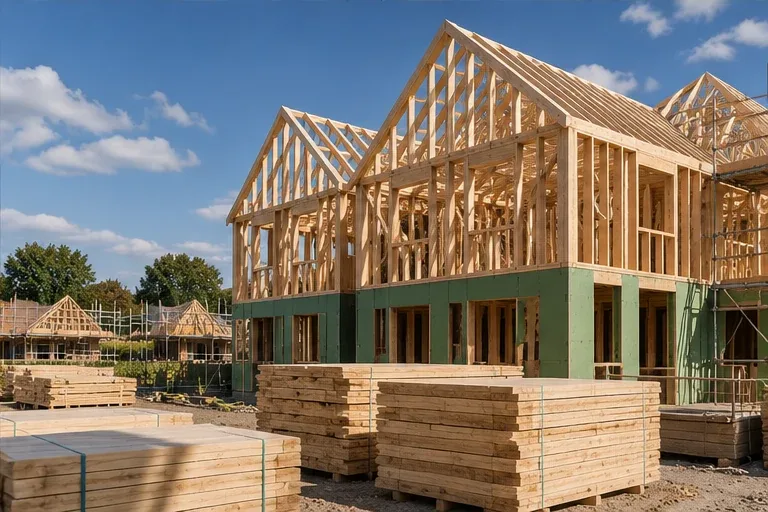
Timber-framed homes under construction on a development site.

What we check

Establish a defensible baseline

Early models may use area-based quantities and generic carbon data. Later assessments should replace them with measured quantities, specifications and suitable environmental product declarations where available. We record data quality and, where the RICS method applies, calculate and report the required stage- and data-dependent contingency allowance so the apparent precision of a total does not hide uncertainty.

Find the material hotspots

Structure, foundations, façades, finishes and building services can contribute differently across building types. Results are organised by element and life-cycle stage so the design team can see where a change is likely to matter.

Compare like with like

Option studies need consistent functional performance, quantities, service life, replacement and end-of-life assumptions. A lower product-stage number alone does not automatically create the lower whole-life result.

Connect operational and embodied decisions

Added insulation, renewables and services can reduce operational emissions while adding material impacts. Coordinated energy and carbon modelling helps the team understand that balance without collapsing distinct methodologies into one figure.

Keep the data usable

We can organise quantities, classifications, source records and scenario notes for review and later project stages. Where agreed, a representative One Click LCA import can be tested before an import-oriented dataset is described as compatible; no software result is claimed unless it has been run and checked.

Common coordination issue

Compare options using equivalent function, quantities and life-cycle assumptions. Product-stage totals alone can conceal different replacement cycles, operational impacts or end-of-life scenarios.

What you receive

Scope and data-quality record

Method, boundaries, exclusions, assumptions and confidence stated before the headline totals.

Carbon baseline

Results by agreed life-cycle stage and element, with suitable intensity and total measures.

Hotspot and option analysis

Defined comparisons that show where the project can reduce impact without obscuring functional differences.

Reporting dataset

Traceable quantities and carbon sources in the agreed project format, with an import-tested One Click LCA dataset where that workflow is commissioned.

Getting started

What we need

Natural insulation and construction materials beside a timber-framed window.

Assessment brief

Required standard or guidance, project stage, life-cycle modules, reference study period, reporting units, targets and submission format.

Design quantities

Area schedules, cost plan, bill of quantities, BIM exports, structural and architectural information, and MEP specifications at the available level of detail.

Carbon evidence

Environmental product declarations, product data, transport and construction scenarios, replacement assumptions and end-of-life information.

Operational model

Relevant energy, water or other in-use assumptions where the commissioned whole-life scope includes them.

Scope whole-life carbon

Before commissioning

Is whole-life carbon the same as a Part L calculation?

No. Part L uses an approved energy methodology for regulatory compliance. Whole-life carbon assesses emissions across material and building life-cycle stages under a separate scope.

Do we need final quantities before starting?

No. Early assessment can use proportionate assumptions, provided their uncertainty is visible and the model is updated as the design develops.

Does software choose the lowest-carbon design?

No. Software calculates a defined scenario. The project team still needs to assess function, safety, durability, procurement, cost and wider design consequences.

Sources and further reading

Use the edition, jurisdiction and assessment route that apply to the project. Publication of newer guidance does not automatically change an existing project’s requirements.

Define the stage, boundary and question first

Send the project brief, design stage, available quantities and the policy, funder or client requirement you need to address.

Scope whole-life carbon